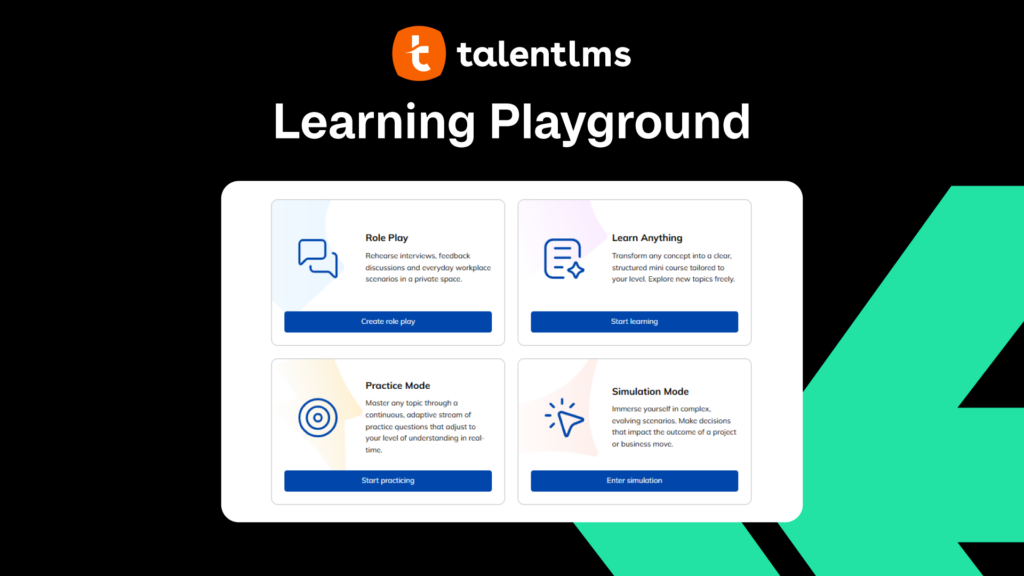

AI in Corporate Learning: Why the Future of Learning Lies Not in Courses, but in Conversation
Knowledge is available. Putting it into practice remains the challenge.
For years, companies have been investing in digital learning platforms, e-learning courses, and knowledge databases. Knowledge has never been as easily accessible as it is today. At the same time, a familiar problem is evident in many organizations: Employees complete training courses, receive certificates, and then return to their day-to-day work – often without applying what they’ve learned in a sustainable way.
This is precisely where the greatest challenge in corporate learning lies: It is not the imparting of knowledge, but its transfer into practice that determines the success of learning initiatives. With the advent of artificial intelligence, a new generation of learning platforms is now emerging that addresses this problem. The most exciting development here is not the automatic generation of learning content, but the emergence of intelligent AI coaches that guide employees as they learn, apply, and reflect.
From a Learning Management System to a Smart Learning Companion
Traditional learning management systems (LMS) were originally developed to manage training, deliver learning content, and track learning progress.
Modern learning platforms now go far beyond that.
Through the use of AI, LMS solutions are increasingly evolving into intelligent learning environments that actively support employees and enable personalized learning experiences.
These new capabilities include, for example:
- Role-playing exercises with virtual conversation partners
- Simulations of real-world work situations
- Individual coaching and reflection sessions
- Personalized learning recommendations
- Situational support directly within the work process
- Automatic identification of skill gaps
This fundamentally shifts the role of the learning platform: it evolves from a system for managing courses into an active companion in the learning and development process.
Learning in the Flow of Work: Learning takes place where performance is created
The trend toward “learning in the flow of work” has been gaining momentum for years. Analysts such as Josh Bersin and Deloitte point out that employees increasingly need to learn when specific challenges arise—not weeks or months in advance in a seminar room.
AI coaches enable exactly this approach. Instead of relying exclusively on formal training, employees can receive support at any time:
- Before a difficult conversation with a client
- When preparing for a feedback session
- During an onboarding session
- When solving complex tasks
This makes learning more immediate, relevant, and significantly more effective.
The learning platform evolves from a knowledge repository into a performance support system.
Why AI Coaching Improves Learning Transfer
Studies have shown for years that a large portion of the knowledge imparted in training sessions is lost just a few weeks after the session. The reason rarely lies in the quality of the training, but rather in the failure to apply what was learned to everyday work.
AI coaches can bridge this gap.
They continue to support employees after a training session and encourage reflection through targeted questions such as:
- Which method from the training did you apply this week?
- What challenges did you encounter?
- What would you do differently next time?
- What support do you need?
This creates a continuous learning process rather than a one-time training event. This can make a significant difference, especially in the area of behavioral development.
The Main Areas of Application for AI in Corporate Learning
Leadership Development
Leaders must regularly engage in challenging conversations – from feedback sessions to conflict situations. AI coaches can simulate such situations, generate different conversation scenarios, and provide personalized feedback. This creates a safe space for practice before real conversations take place.
Sales
Sales teams benefit particularly from interactive role-playing exercises. Employees can practice handling objections, test different conversation strategies, and continuously improve their communication skills. Instead of static sales training, this creates a practical learning environment with immediate feedback.
Onboarding
New employees, in particular, often have many questions that cannot always be answered right away. AI-powered learning assistants provide round-the-clock support, answer questions, and help deliver information exactly when it’s needed. This makes onboarding more efficient, personalized, and scalable.
The Next Stage of Development: Skills, Learning, and Performance Converge
Skills are not a new topic in talent development – competency models and skills management have been part of corporate practice for decades. However, due to rapid technological change, the use of artificial intelligence, and the growing need for continuous professional development, skills are currently experiencing a new dynamic and are once again taking center stage in strategic HR work.
Today, companies are increasingly seeking to understand:
•What competencies do employees possess?
•What skills will be needed in the future?
•Where are the skill gaps?
•What development measures make sense?
The next generation of learning platforms therefore goes beyond simply providing learning content. It combines learning, skills, and performance into an integrated system that specifically supports individual development and helps companies actively shape change.
These systems will:
• Assess skills
• Identify competency gaps
• Derive development goals
• Recommend appropriate learning paths
• Facilitate the transfer of learning
• Support performance
This results in a holistic approach to talent development.
Development has already begun
What was considered a vision of the future just a few years ago is already becoming a reality today.
With the Learning Playground and the AI Tutor, TalentLMS – and soon eFront as well – already offers an AI-powered learning environment where employees can engage in realistic role-plays, scenarios, and conversation simulations. The focus here is not merely on imparting knowledge, but on active practice and application.
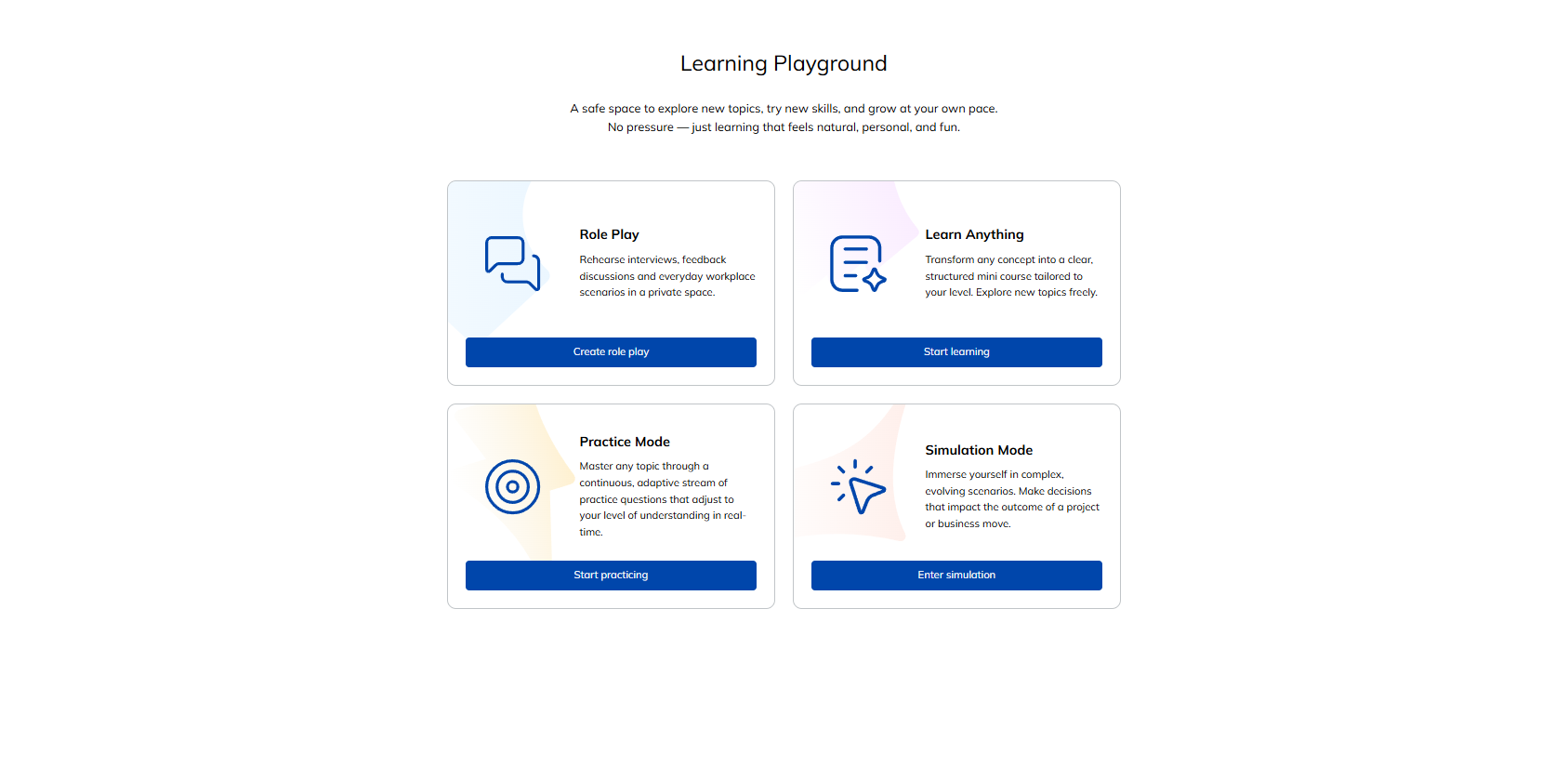
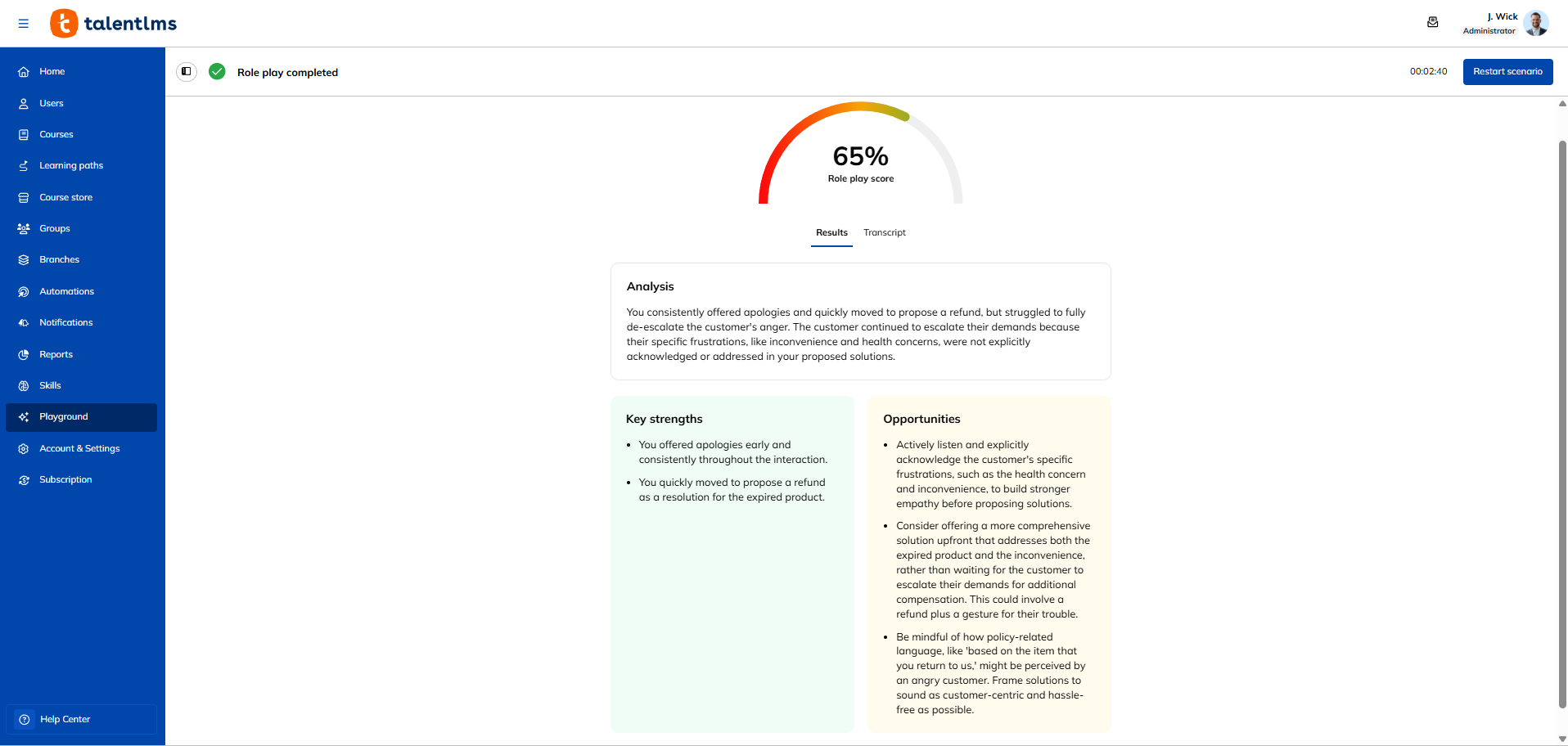
At eFront LMS, too, the field of AI is constantly evolving. In addition to the AI features already available to support content creation, additional AI-powered learning and coaching features will be integrated in the future. The direction is clear: learning platforms are evolving from traditional content and course management systems into intelligent companions for learning, skill development, and performance.
Conclusion: AI delivers its greatest value after training
The discussion about AI in corporate learning often focuses on the automated creation of content.
However, the real potential lies elsewhere.
The greatest value is created when AI helps employees apply knowledge, make decisions, and sustainably integrate new behaviors into their daily work routines.
Companies that embrace AI-powered learning support early on are not only investing in increased learning activity; they are also laying the foundation for sustainable skill development, improved performance, and a modern learning culture.
Would you like to learn how modern learning platforms such as eFront or TalentLMS can support AI-powered learning and development processes?
The experts at clickandlearn would be happy to advise you on the possibilities offered by modern learning and talent development platforms.